Responsible AI for Education
Accreditation by GOER
Our Global Impact and Collaboration
Recognized as a key strategy to transform education and improve learning outcomes.


Expert Recommendations on Safe and Responsible Use of AI
All closed AI features—such as accessibility tools, study skills supports, and interactive vision boards—are available to students k-12 and universities. These features use structured, choice-based interactions, helping students build self-regulation and executive functioning skills, without replacing teacher guidance.For conversational AI, involving open-ended dialogue and generative responses, we recommend implementation starting no earlier than high school (ages 14-15). This approach aligns with research on adolescent brain development:
- The prefrontal cortex—essential for decision-making and self-regulation—matures significantly during adolescence.
- Metacognitive abilities improve in early to mid-adolescence, allowing for more critical engagement with AI.
- Younger children are more prone to suggestibility and anthropomorphism, making early use of conversational AI higher risk.
Final implementation decisions are left to individual schools and districts, allowing for flexibility based on local context and student readiness. However, we advocate for an evidence-based approach aligned with child and adolescent brain development to maximize positive educational impact while safeguarding student well-being.Important Considerations for High School Use:We recognize that adolescents remain vulnerable to social and motivational pressures:
- The teen brain is highly responsive to instant rewards and social validation, which can lead to over-reliance on AI and reduced engagement in real-life learning and relationships.
- Without guidance, AI risks becoming a shortcut, undermining critical thinking and self-efficacy.
What Checkit Learning Does to Support Healthy AI Use:
- Built-in Educational Scaffolding: AI prompts reflection, self-monitoring, and positive learning habits rather than providing quick answers.
- Bias and Safety Monitoring: We use human and automated oversight to ensure fair, accurate, and safe AI responses.
- Transparency and Awareness: Students are informed they are interacting with AI, with built-in guidance on ethical and responsible use.
- Research Partnerships: We collaborate with neuroscientists, psychologists, and educators to update our tools in line with the latest research.
We Encourage Schools to:
- Use structured frameworks and clear use cases for AI.
- Model healthy digital habits and reinforce human connections.
- Provide ongoing educator involvement and oversight to ensure AI is used as a learning amplifier, not a replacement for effortful thinking.
What Students and Educators Say





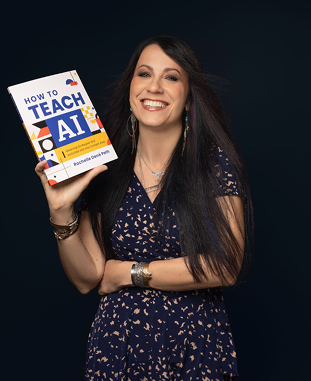

Make an impact with neuroscience insights.