How to Empower Active Learning with Brain-Based Approaches


By Melinda Medina
There is a noticeable difference between a classroom where students are receiving information and one where they are actively doing something with it.
I have seen students sit through a lesson, nod along, complete their notes, and appear to understand everything being taught. Then, when I ask them to explain the concept independently, apply it to something unfamiliar, or return to it several days later, the confidence disappears.
That gap has made me think more carefully about what we mean when we say a student has “learned” something.
Learning is not simply exposure to information and the memorization of it. Active learning requires students to retrieve, connect, question, apply, reflect, and engage in productive struggle with information. When we design instruction around those cognitive processes, students become active participants in their learning rather than passive recipients of it. In turn, we create classrooms where educators facilitate learning rather than simply deliver information, giving students greater ownership of the thinking, questioning, and discovery that make learning meaningful.
A widely cited meta-analysis of 225 studies comparing traditional lecturing with active learning in undergraduate STEM courses found that students in active-learning environments performed better on assessments, while students in traditional lecture courses were significantly more likely to fail.
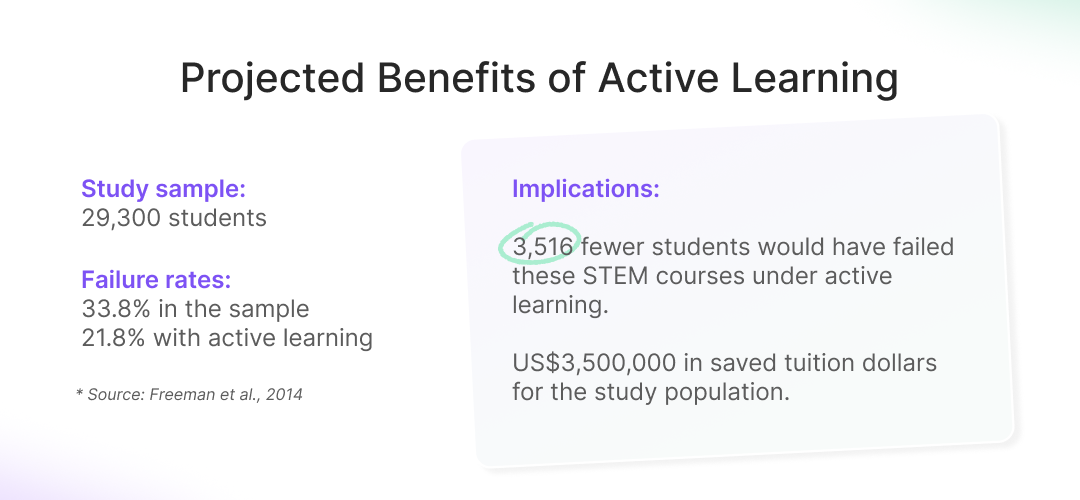
Although those findings come from higher education and STEM classrooms, the larger question is relevant across grade levels and content areas in K-12 settings:
How much thinking are our students actually doing during the lesson?
The Brain Needs to Retrieve, Not Just Receive
One of the simplest shifts educators can make is moving from repeatedly giving students information to asking students to retrieve what they know.
Retrieval practice asks learners to pull previously learned information from memory and their prior experience and knowledge, rather than simply re-reading or reviewing it. Research supported by the U.S. Department of Education's Institute of Education Sciences has found that retrieval practice can strengthen long-term retention across different educational settings. That does not have to mean another test.
In my classroom, retrieval might look like closing our notebooks and spending two minutes brainstorming everything we remember from the previous day’s lesson. It could mean asking students to explain a concept to a partner before returning to the text, responding to a warm-up question, reconstructing the sequence of events from a story, or explaining how two ideas connect. I might also use a fishbowl discussion where students respond to one another using details they remember from a text, requiring them to retrieve information while listening, questioning, and building on their peers’ ideas.
I also encourage students to connect new learning to knowledge and experiences they already have. For example, when my students read Richard Connell’s The Most Dangerous Game, I asked them to consider: How has Social Darwinism shown up throughout history, and where might we see similar ideas reflected in the modern world? Rather than treating the story as an isolated text, students had to connect its themes and ideas to historical knowledge, current contexts, and their own understanding of the world. Essentially, I want to expand students’ knowledge by first activating what they already know—and then giving them opportunities to question, connect, and build upon it.
The key is that I resist immediately giving them the answer.
That moment when a student says, “Wait, I know this,” and searches their memory can feel uncomfortable. But some cognitive difficulty can be productive. If I immediately rescue the student, I may unintentionally remove the very cognitive work that helps strengthen and connect to the learning.
This is especially important when technology can provide answers almost instantly. The goal should not always be to make learning faster. Sometimes our students need enough time and space to think.
Space Learning Instead of Teaching It Once
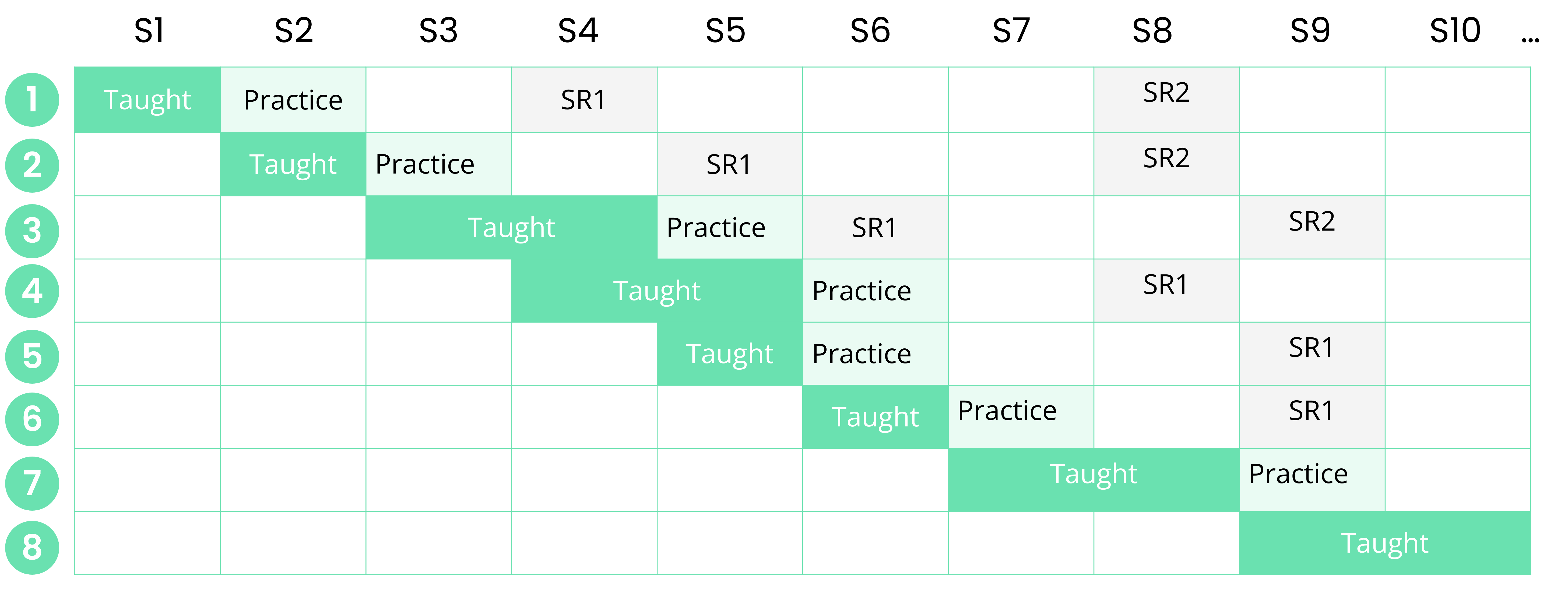
Another important principle from cognitive science is spacing.
Students often encounter a concept, complete an assignment or assessment, and then move on. But memory does not necessarily work well under a “teach it, test it, leave it” model.
Research reviewed by the Institute of Education Sciences supports distributing learning opportunities over time rather than concentrating them into one period. For educators, this means intentionally bringing old learning back.
A question from September can appear in October. Vocabulary from last week's lesson can return in this week's warm-up. Reinforcement and repetition is a part of learning. Students can revisit an earlier writing assignment and identify where they would now revise their thinking.
These small instructional choices communicate something important: learning is cumulative. Instead of asking, “Did I teach this already?” we can ask, “When will students have another opportunity to retrieve and use this?”
Let Students Talk Their Way Into Understanding
Active learning also requires opportunities for students to explain their thinking. A correct answer tells me something. The reasoning behind that answer tells me much more and pushes the student to engage in more critical thinking.
When students turn and talk, debate interpretations, justify a response, teach a concept to a peer, or defend their thinking, they have to organize what they know into language and perception. The classroom shifts from a place where the teacher does most of the intellectual work to one where students carry more of that cognitive responsibility.
This can also make learning more equitable when participation is deliberately structured. A 2020 meta-analysis examining undergraduate STEM courses found that high-intensity active learning was associated with narrower achievement gaps in exam performance and passing rates for students from underrepresented groups. The researchers emphasized that active learning was most effective for equity when deliberate practice was paired with inclusive teaching.
Active learning, then, cannot simply mean calling on the fastest student to raise a hand and then moving on with the lesson. It means creating multiple entry points: think-pair-share, written responses before discussion, small groups, visuals, sentence starters, collaborative problem-solving, movement, or technology when it meaningfully increases access.
For students who need additional processing time or scaffolding, participation can look different without reducing the cognitive demand.
Movement Can Be Part of Learning, Too
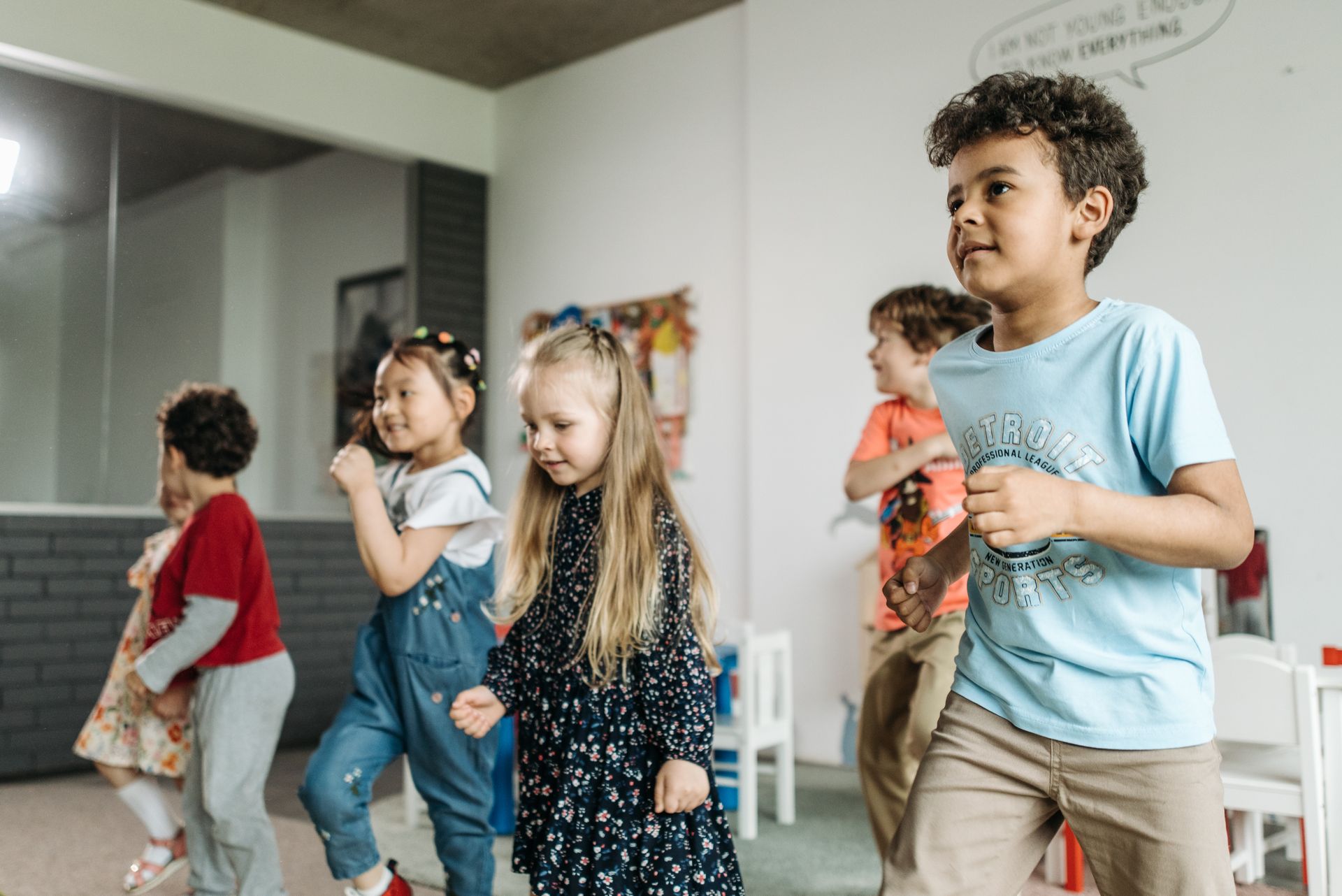
Sometimes active learning should be literally active.
Students were not designed to spend an entire school day sitting still. Brief opportunities to move can be incorporated into instruction without sacrificing academic learning. The CDC notes that classroom physical activity can support concentration, on-task behavior, motivation, engagement, and academic performance.
A gallery walk can replace a worksheet. Students can move to different areas of the room to represent their position on a question. Vocabulary or review stations can require students to rotate, discuss, and respond. Even a brief movement break can help reset attention before students return to cognitively demanding work.
The purpose is not movement for movement's sake. It is recognizing that attention fluctuates and designing learning accordingly.
Build Metacognition Into the Lesson
Perhaps one of the most powerful brain-based approaches is also one of the simplest: ask students to think about their thinking.
Metacognition helps learners recognize what they understand, where they are confused, which strategies helped them, and what they need to do next. Research on retrieval, feedback, and metacognitive monitoring suggests that these processes can work together to support more durable learning.
At the end of a lesson, instead of only asking, “What did you learn?” I might ask:
- What was difficult today, and what did you do when it became difficult?
- What is something you understand now that you did not understand at the beginning?
- What strategy helped you most?
- What question do you still have?
- How confident are you that you could explain this tomorrow without your notes?
These questions shift students from simply completing school to understanding themselves as learners.
Brain-Based Does Not Mean Brain Gimmicks
There is an important caution here.
Education has a long history of adopting ideas because they sound scientific. Labels such as “visual learner,” “auditory learner,” “left-brained,” and “right-brained” have often been presented as neuroscience despite lacking the evidence necessary to justify the instructional conclusions attached to them. The OECD has specifically identified several of these ideas as educational “neuromyths.”
Brain-based teaching should not mean designing lessons around catchy claims about the brain.
It should mean using what cognitive and educational research tells us about attention, memory, retrieval, practice, feedback, movement, metacognition, and meaningful engagement while remaining willing to revise our practices as the evidence evolves.
From Engagement to Ownership
Ultimately, active learning is not about making every lesson louder, busier, or more entertaining.
A quiet classroom can contain lots of cognitive activity. A student writing independently, wrestling with a difficult question, revising an argument, or trying to retrieve something from memory is actively learning.
The better question is not, “Are my students busy?” It is, “Who is doing the thinking?”
When teachers intentionally create opportunities for students to retrieve information, move, discuss, make connections, reflect, solve problems, and sit with productive struggle, we begin transferring ownership of learning from the teacher to the learner.
And perhaps that is the most important brain-based approach of all: designing classrooms where students are not simply given opportunities to know more, but are consistently challenged to think more deeply about what they know, how they know it, and what they can do with it.
This article was crafted by Melinda Medina, an independent contributor engaged by CheckIT Labs, Inc. to provide insights on this topic.

Melinda is an aspiring leader, consultant, special educator, published author, and advocate for equitable education. She holds a Master of Science in Teaching and a Master of Science in Educational Leadership, and has dedicated her career to supporting neurodiverse students and breaking generational cycles through education.