Independent Learning Plans: How to Effectively Tailor Learning to Individual Students



By Melinda Medina
A few years ago, I found myself sitting at a table surrounded by assessment data, IEPs, classroom observations, progress monitoring reports, behavior logs, attendance records, and enough sticky notes to wallpaper my office. As I stared at the mountain of information in front of me, I had a thought that every educator has probably had at some point:
"There has to be an easier way to figure out what students actually need."
At the time, I was supporting a group of students who all carried the same classification, sat in the same classroom, received the same instruction, and were working toward the same standards. On paper, they looked remarkably similar. In reality, they couldn't have been more different.
One student could decode text fluently but struggled to organize their thoughts in writing. Another could verbally explain complex concepts but shut down the moment a pencil touched paper. One needed visual supports. Another needed movement. One was motivated by praise. Another would rather walk barefoot across Legos than receive public recognition.
The longer I worked in education, the more I realized that many of our systems were designed around categories while teaching required us to understand individuals.
After 13 years in special education, I have learned that effective teaching is not about creating 30 different lesson plans. It is about creating pathways that allow students to access learning, engage with content, and demonstrate understanding in ways that recognize who they are as learners while maintaining high expectations for everyone.
This is where Independent Learning Plans (ILPs) can become powerful tools.
When implemented thoughtfully, ILPs help educators move beyond one-size-fits-all instruction and toward meaningful personalization. They provide a framework for understanding learner variability, amplifying student voice, monitoring progress, and helping students develop the executive functioning and self-advocacy skills they will need long after they leave our classrooms.
Moving Beyond Learning Styles
For years, educators were encouraged to identify whether students were visual, auditory, or kinesthetic learners and then tailor instruction accordingly.
While many students certainly have preferences for how they engage with information, research has consistently found limited evidence that matching instruction to a preferred learning style improves academic outcomes.
What does matter is understanding learner variability.
The science of learning tells us that no two brains are identical. Students differ in background knowledge, language development, processing speed, executive functioning, attention, motivation, emotional regulation, interests, and prior experiences. These differences influence how students access information, engage in learning, and demonstrate understanding.
This perspective aligns closely with the work of the Universal Design for Learning (UDL) framework developed by CAST, which encourages educators to proactively design learning experiences that anticipate learner differences rather than reactively addressing barriers after they emerge.
Instead of asking: "What learning style does this student have?"
We should ask: "What barriers might prevent this student from accessing, engaging in, or demonstrating learning?"
That question shifts our focus from labels to access.
What an Independent Learning Plan Should Actually Do
An effective ILP is not another document that sits in a folder. At its best, an ILP serves as a living roadmap that helps educators and students answer four essential questions:
- What are this student's strengths?
- What barriers impact their learning?
- What supports increase access and engagement?
- How will progress be measured and monitored?
When designed effectively, ILPs become bridges between assessment data, instructional planning, and student growth. They help teachers move from broad assumptions to targeted instructional decisions.
Why Student Voice and Agency Matters
One of the greatest mistakes we make as educators is assuming we know what students need without asking them. Students often have valuable insights about their own learning experiences. Some know they lose focus during lengthy lectures. Others recognize that they need visual supports, opportunities to move, or additional processing time. Some students can clearly identify topics that motivate them, while others need support discovering what sparks their curiosity.
When students contribute to their learning plans, they begin developing ownership of their educational experiences. This is where student agency begins.
One of the most powerful aspects of an ILP is its ability to help students establish meaningful goals. Research consistently demonstrates that goal-setting increases motivation, persistence, and achievement. However, goals are most effective when students participate in creating them.
Rather than assigning goals to students, educators can work collaboratively with learners to establish:
- Academic goals
- Behavioral goals
- Executive functioning goals
- Postsecondary goals
- Career exploration goals
This process becomes particularly important for students with disabilities, who are often accustomed to adults making decisions on their behalf. When students participate in goal development, they begin to see themselves as capable decision-makers rather than passive participants.
Executive Functioning and Progress Monitoring
Many students struggle not because they lack ability but because they struggle with executive functioning skills.
Executive functioning includes:
- Planning
- Organization
- Time management
- Task initiation
- Sustained attention
- Self-monitoring
- Flexible thinking
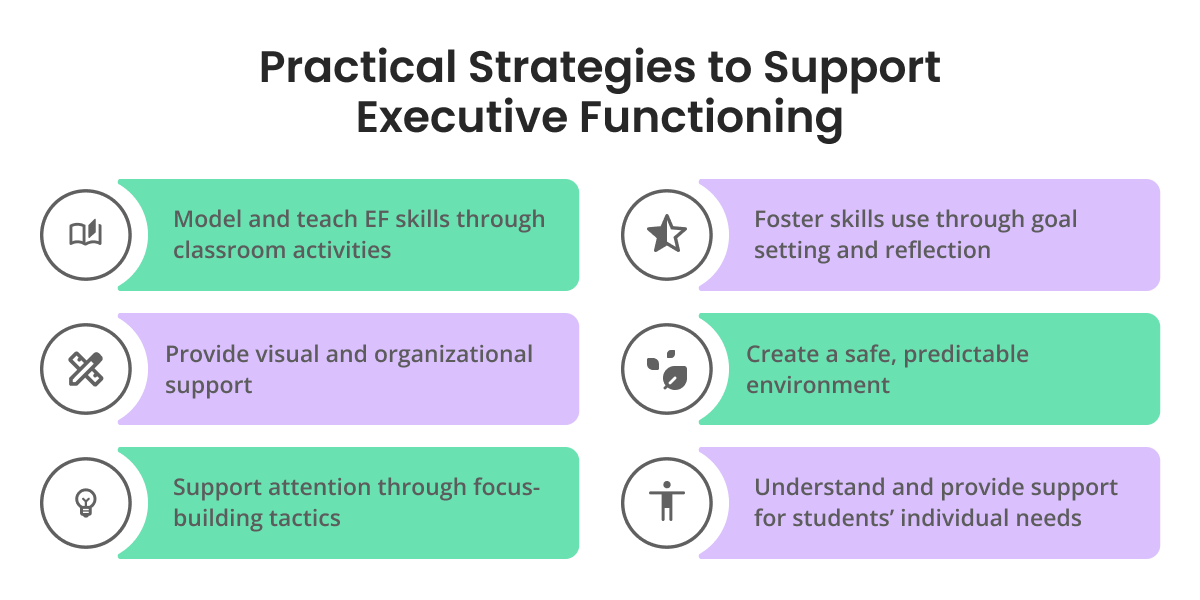
As an educator, I have often observed students who possess the academic skills necessary for success but struggle to manage the systems required to demonstrate those skills consistently. Effective ILPs help educators identify executive functioning needs and intentionally build supports into instruction. For some students, this may involve visual schedules or task checklists. For others, it may include chunking assignments, teaching organizational systems, or using digital tools to support planning and self-monitoring. Over time, these supports can be gradually released as students develop greater independence.
Additionally, goal-setting without progress monitoring is simply wishful thinking. Effective ILPs require ongoing review and adjustment.
Progress monitoring allows educators and students to answer critical questions:
- Is the student making progress?
- Which supports are working?
- Which supports need adjustment?
- What barriers continue to exist?
This process creates opportunities for reflection and continuous improvement. More importantly, it allows students to see evidence of their own growth. Again, this is where agency enters through the door. When students can track progress toward goals, they begin developing a growth mindset and a stronger sense of self-efficacy.
How ILPs Support Educators
While much of the conversation focuses on student benefits, ILPs also provide significant advantages for educators. They help teachers:
- Better understand learner variability
- Identify patterns across student needs
- Make data-informed instructional decisions
- Differentiate instruction efficiently
- Strengthen communication with families
- Monitor intervention effectiveness
- Support collaborative problem-solving among staff
Perhaps most importantly, ILPs shift educators from reactive teaching to proactive planning. Instead of waiting for students to struggle, teachers can anticipate barriers and design supports before challenges arise.
Integrating Research-Based Frameworks Into ILPs
One of the greatest strengths of ILPs is their flexibility. They can incorporate a variety of evidence-based methodologies, including:
- Universal Design for Learning (UDL): Providing multiple means of engagement, representation, and expression to remove barriers before they occur.
- Multi-Tiered Systems of Support (MTSS): Using data to provide increasingly intensive supports based on student need.
- Differentiated Instruction: Adjusting content, process, products, and learning environments based on student readiness and needs.
- Self-Regulated Learning: Teaching students to plan, monitor, evaluate, and adjust their own learning strategies.
- Strengths-Based Education: Focusing on student assets rather than deficits.
- Personalized Learning: Creating flexible pathways that align instruction with student interests, goals, and aspirations.
Rather than replacing these frameworks, ILPs can serve as the mechanism through which they are coordinated and implemented.
The Future of Personalized Learning
As artificial intelligence, adaptive technologies, and learning analytics continue to evolve, educators will have access to more information about student learning than ever before. Yet no amount of data can replace the professional expertise of a teacher who truly knows their students. The most effective Independent Learning Plans are not built from algorithms. They are built through relationships, observation, reflection, assessment, and meaningful conversations with learners.
After more than a decade in special education, I have learned that students rarely succeed because we perfectly tailor every lesson. They succeed because they feel seen, understood, challenged, and supported.
An Independent Learning Plan is simply a tool that helps us make those commitments visible. When we embrace learner variability, amplify student voice, build executive functioning skills, monitor progress, and foster student agency, personalization becomes more than an educational buzzword. It becomes a pathway toward equity, independence, and lifelong learning.
This article was crafted by Melinda Medina, an independent contributor engaged by CheckIT Labs, Inc. to provide insights on this topic.

Melinda is an aspiring leader, consultant, special educator, published author, and advocate for equitable education. She holds a Master of Science in Teaching and a Master of Science in Educational Leadership, and has dedicated her career to supporting neurodiverse students and breaking generational cycles through education.