Teaching With Impact: Key Takeaways on Spacing and Retrieval Practice



Spacing and retrieval practice are cognitive learning strategies with some of the strongest research evidence supporting their use. In a series of middle-school experiments, Roediger et. al. demonstrated that a Test-Enhanced Learning (TEL) approach grounded in active retrieval, learning from feedback, and improvement in metacognition can improve students’ performance by an entire letter grade.
Their research further reveals that these practices can contribute to proportional performance gains of 29% on semestral exams and a 17% improvement at the end of school year. This points to long-term benefits of classroom quizzes as opposed to re-reading material without regular testing.
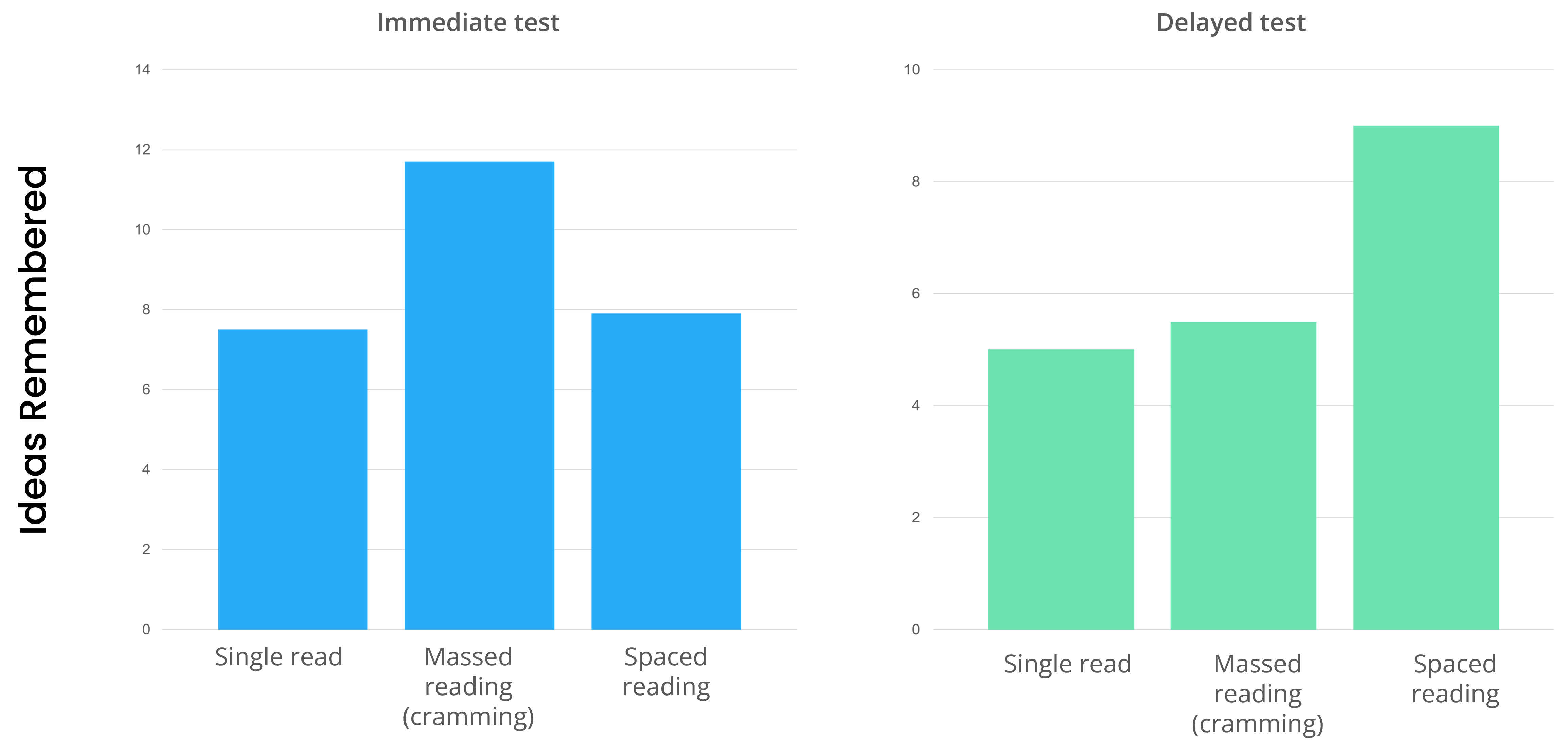
Additionally, evidence from Rawson and Kintsch shows that spaced reading of test material helps learners retain more ideas, not only on immediate tests but on delayed tests as well.
These insights were brought to us during our recent webinar with Dr. Cynthia Nebel, a cognitive psychologist currently working as the Director of Learning services, at St. Louis University School of Medicine.
In our January 28, 2026 session, Dr. Nebel joined Peg Mischler, Director of Education and Research at CheckIT Learning, to share practical strategies for incorporating spacing and retrieval practice into lesson plans.
Spacing
As opposed to cramming, spaced practice supports longer retention of studied material. Rather than spending three hours re-reading materials the night before an exam, students benefit more in the long term by spacing out their study sessions.
It’s important to note that spacing doesn’t require students to spend more time studying overall. Instead, this approach focuses on helping them reallocate that time across multiple days to help ensure stronger long-term retention.
Teachers can support this active learning approach by encouraging students to study in shorter sessions spread over a longer period. They can also design cumulative assignments on a consistent basis to promote spaced repetition.
Retrieval practice
Retrieval strategies are designed to help students effectively recall information. This process has a well-established positive effect on learning, with or without feedback, as it encourages the brain to build the more neural pathways needed to access information later.
Teachers can apply this technique by prompting students to retrieve information first, and then allowing them to reread the material or providing the correct answers. Students can also be asked to draw a diagram from memory or use other activities that require them to actively process what they have learned.
Free Resources for Educators
If you wish to watch the full webinar and also get a sample lesson plan with integrated spacing and retrieval strategies, fill out the details below and click Get Access.

A team of marketing and communication specialists exploring the incredible potential of neuroscience and AI in education.